Radial In-Feed
The cutting head feeds radially into a shaft or internal bore to establish keyway depth.

A keyseat cutter, often called a Woodruff keyway cutter, mills narrow slots, keyseats, and retaining-ring grooves in shafts and bore housings. Its circular cutting head and reduced-diameter shank provide radial cutting access and neck clearance.
The cutting head feeds radially into a shaft or internal bore to establish keyway depth.
Ground peripheral teeth cut parallel slot walls for controlled drive-key fit.
The reduced neck provides clearance between the cutter and adjacent shaft shoulders.
Alternating right- and left-hand tooth geometry can improve shearing action and chip clearance.
Available in standard ANSI Woodruff dimensions for matching specified key sizes.
Solid construction limits tool deflection during radial in-feed passes.
Staggered flutes can break chips, suppress chatter, and improve surface finish.
Precision-ground tooth margins support clean keyseat edges and accurate key fit.
Available tool materials and coatings support alloy steel, stainless steel, cast iron, brass, and aluminum.
| Specification | Range / Details |
|---|---|
| Cutter Diameter Range | 1/4" to 1-1/2"+; standard ANSI Woodruff sizes 202 to 1212 |
| Cutter Width Range | 1/16" to 3/8"+; metric 1.5 mm to 10 mm+ available |
| Tooth Styles | Straight tooth or staggered tooth with alternate helix |
| Flute Count | 6 to 16+ peripheral teeth, varying by head diameter |
| Shank Style | Straight cylindrical or Weldon flat shank |
| Operation Type | Keyseat milling, Woodruff slotting, and snap-ring grooving |
| Material / Coating | Best For | Key Advantage |
|---|---|---|
| Solid Carbide | Hardened steels, stainless steel, and high-volume production. | High rigidity limits tool flex and supports controlled keyway width. |
| HSS / HSS-Co | Interrupted cuts, manual machines, and low-volume repair. | Impact toughness helps resist tooth chipping in manual shaft-slotting operations. |
| TiAlN / AlTiN Coating | Tough alloy steels, cast iron, and dry milling. | Thermal hardness helps protect peripheral teeth from friction-related wear. |
Solid carbide provides rigidity for production work, HSS or HSS-Co provides impact toughness for manual and interrupted cuts, and TiAlN or AlTiN supports high-heat ferrous machining.
Use automated radial milling passes to cut keyseats on turned or milled shafts.
Mill axial keyways directly on turned shafting in a single setup.
Used in maintenance and repair work for manual Woodruff keyway cutting.
Cuts half-moon keyways in drive shafts for standard Woodruff keys.
Machines internal and external snap-ring grooves in shafts and bore cavities.
Mills narrow parallel keyseats in power-transmission shafts and gear hubs.
Cuts narrow side channels and clearance undercuts in machinery components.
Straight teeth align parallel to the cutter axis and suit lighter keyways and non-ferrous materials. Staggered teeth use alternating axial rake angles to shear metal progressively, break chips, reduce chatter, and improve finish in tougher alloys.
ANSI Woodruff cutter numbers encode nominal width and diameter. In the source example, a #404 cutter is 4/32" (1/8") wide and 4/8" (1/2") in diameter. Confirm the required cutter against the key and drawing.
No. Standard keyseat cutters are non-center-cutting and are intended for radial in-feed and side milling. Position the tool at an open edge or a prepared clearance area before feeding radially.
Use a rigid cutter and workholding setup, keep tool projection short, consider staggered-tooth geometry, and provide effective coolant or cutting oil for chip evacuation.
Bauron can review non-standard head diameters, custom face widths, neck-clearance lengths, and application-specific coatings based on part drawings.
Bauron provides design and engineering support for custom geometries, specialized coatings, and application-specific keyseat milling requirements.
Talk to Engineering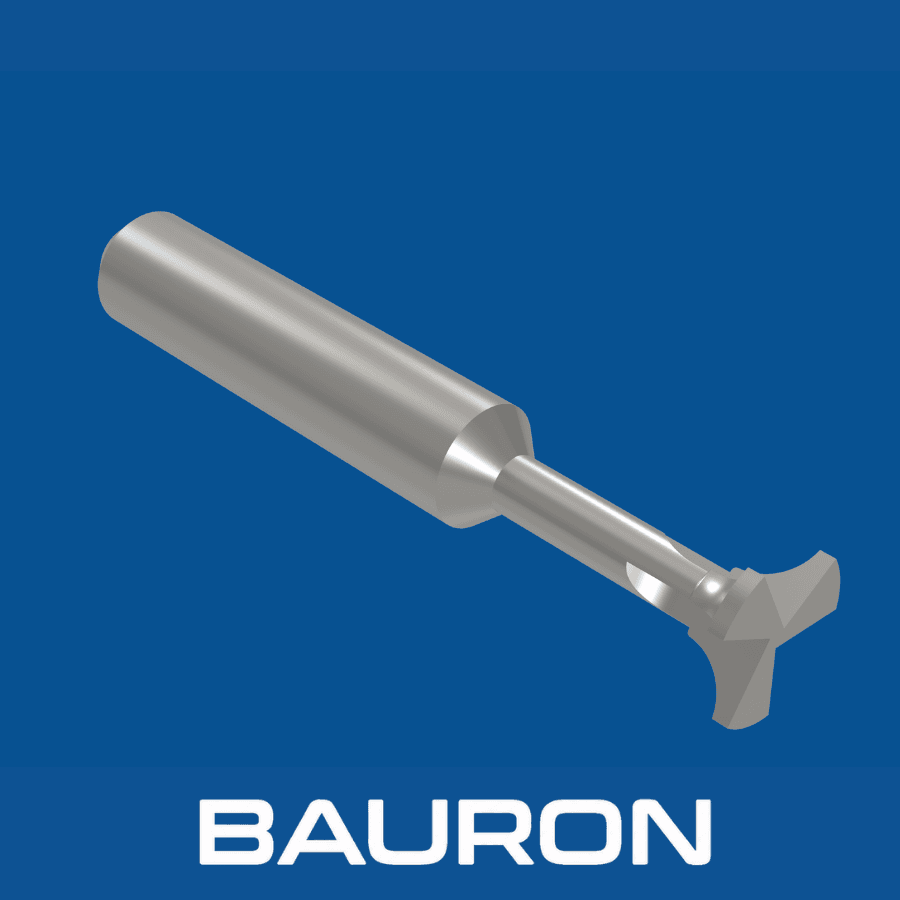
A back corner rounding end mill uses a reverse-concave profile to deburr and radius back-side hole edges and underside workpiece corners in a single setup.
View Product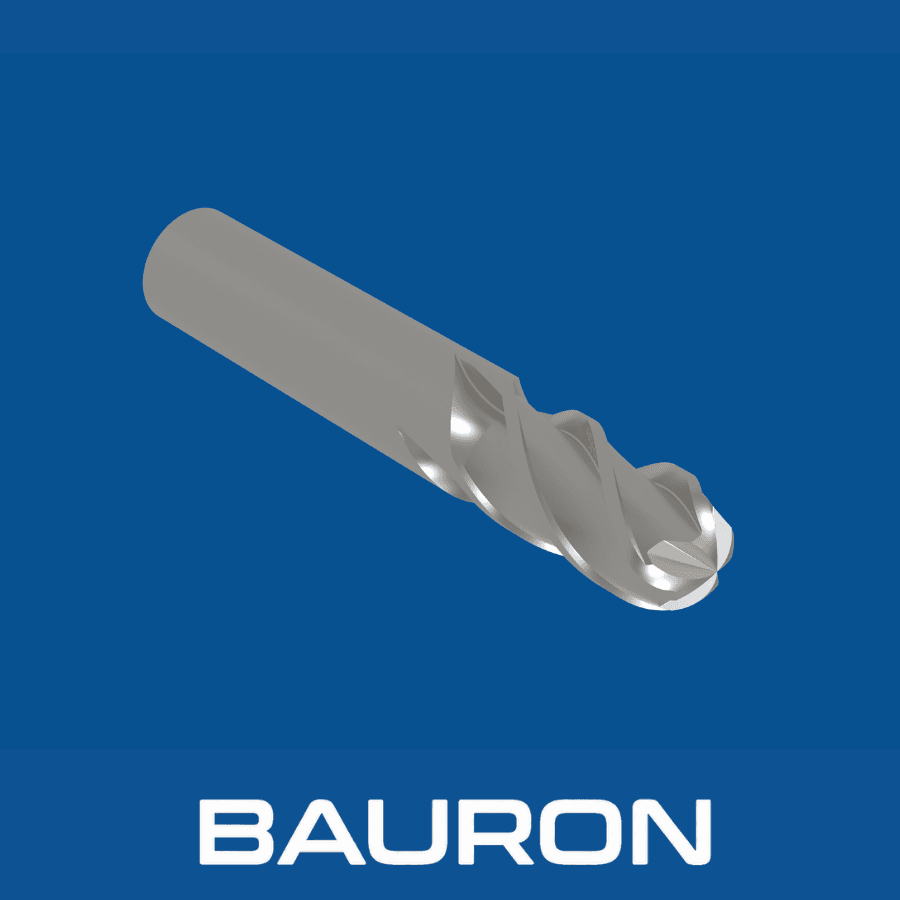
A ball nose end mill is a form-milling tool with a hemispherical cutting tip for 3D contouring, die sinking, and machining complex curved surfaces.
View Product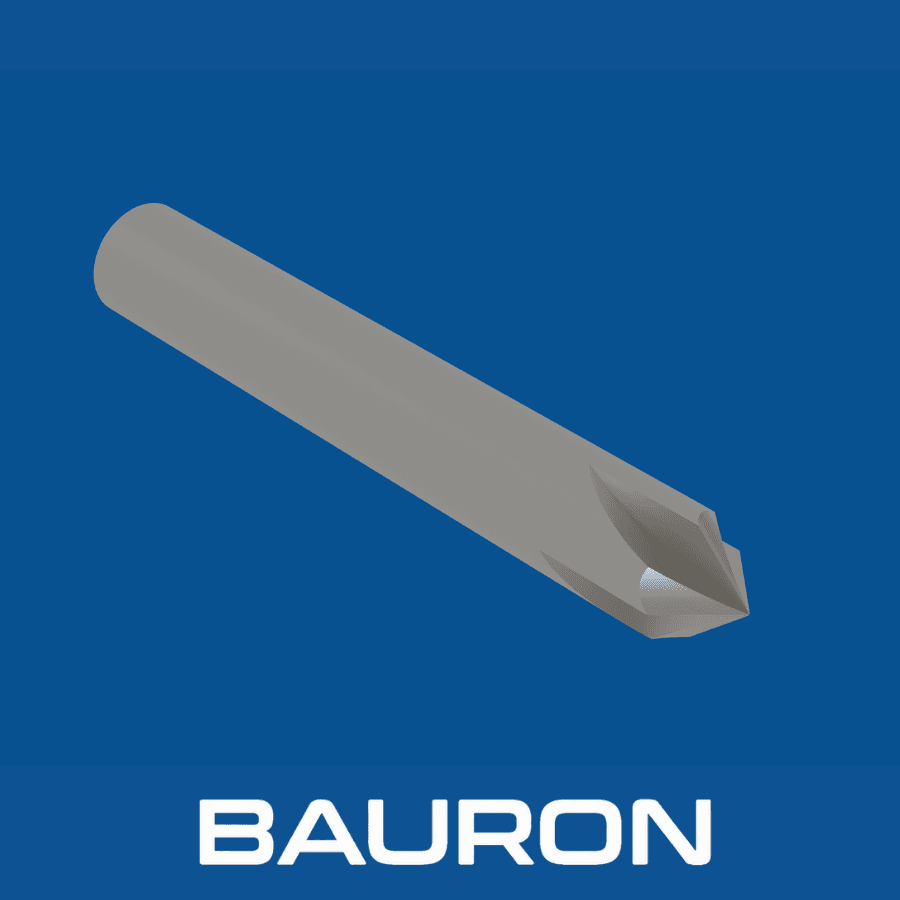
A pointed chamfer cutter is an angled cutting tool with a sharp tip for beveling hole edges, deburring corners, countersinking, and engraving fine details.
View Product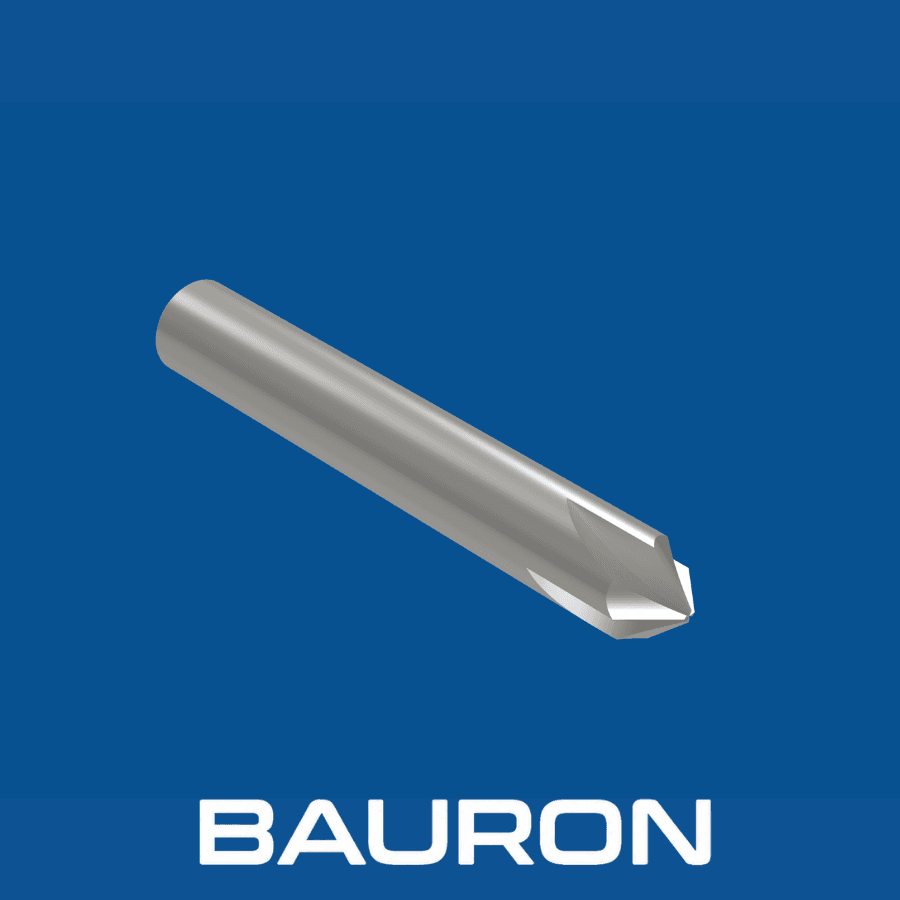
A tipped-off chamfer cutter is an angular milling tool with a truncated flat end that increases tip strength for edge beveling, deburring, and countersinking.
View ProductWork with Bauron's engineering team to develop a cutting tool tailored to your application, material and machining requirements.