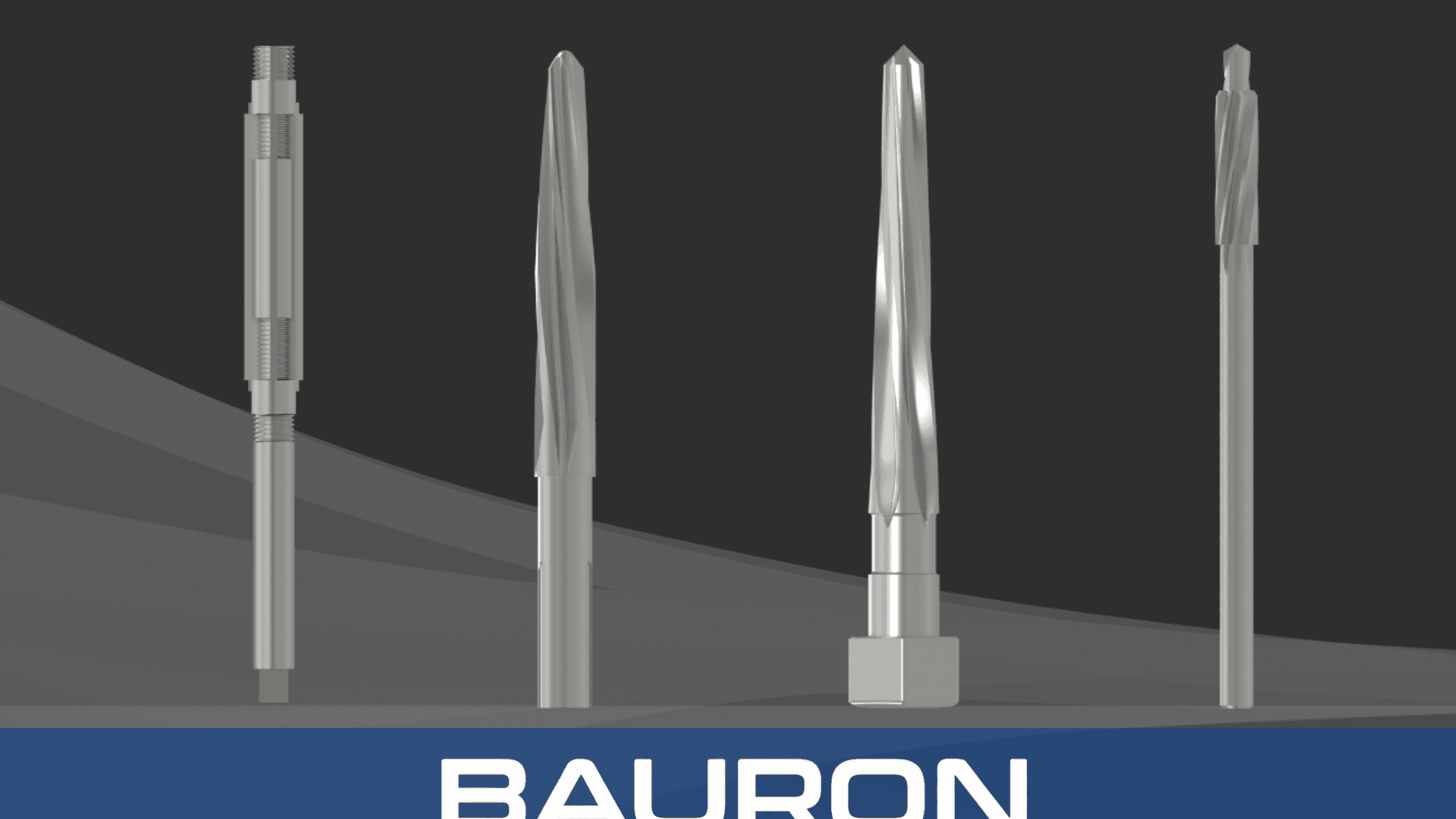
Blade Expansion
Turning the threaded nuts moves a tapered wedge mechanism and shifts the cutting blades outward.

Adjustable reamers are finishing tools used to reach precise, non-standard hole diameters. Their expandable blades let machinists cover custom sizing and repair work without relying on a separate fixed-size tool for every diameter.
Turning the threaded nuts moves a tapered wedge mechanism and shifts the cutting blades outward.
The blades lock into position after the target cutting diameter is set.
As the operator rotates the adjustable hand reamer, multiple cutting edges progressively shear material from the hole.
Straight or spiral flutes move chips away from the cutting edges to support an accurate surface finish.
Provide continuous diameter adjustment and can reduce the number of fixed tools required.
Secure the blades after adjustment to limit dimensional movement during use.
Provides a positive grip in manual tap wrenches.
Distribute cutting forces across several edges to support a smooth finish.
Allow worn blades to be replaced where the selected tool design supports blade changes.
Support accurate final hole sizing when the tool is adjusted and applied correctly.
| Specification | Range / Details |
|---|---|
| Diameter Range | 1/4" to 3-11/32", depending on model |
| Expansion Range | Up to 1/16" per tool |
| Shank Type | Square end for manual wrench operation |
| Flute Type | Straight or spiral |
| Number of Blades | 4 to 8, depending on tool size |
| Available Format | Individual tool or complete adjustable reamer set |
| Material / Coating | Best For | Key Advantage |
|---|---|---|
| HSS (High-Speed Steel) | General machining of aluminum and mild steel. | Balances toughness and affordability for standard use. |
| Cobalt Steel (HSS-Co) | Harder materials such as stainless steel and titanium. | Provides higher heat resistance and edge retention than standard HSS. |
| Titanium Nitride (TiN) | Applications requiring added resistance to friction and abrasive wear. | Can reduce friction and wear while supporting a smoother cut. |
HSS provides a tough general-purpose option, cobalt steel adds heat resistance for harder materials, and TiN coating can reduce friction and wear.
Grip the square shank for hand-operated reaming.
Support careful, low-speed finishing from the tailstock on rotating cylindrical workpieces.
Provide vertical alignment for manual-feed use with the spindle power off.
Incrementally enlarges holes to establish an interference fit for rotating assemblies.
Resizes worn bores to restore specified clearances during automotive rebuilding.
Produces non-standard hole dimensions when an appropriate fixed-size tool is unavailable.
Trues out-of-round holes in heavy machinery during field repairs.
An adjustable hand reamer uses expandable blades for custom diameters in manual work. A fixed chucking reamer has a solid body intended for repetitive machine finishing at a set size.
The stated base-diameter range is 1/4" to 3-11/32", with overlapping tool ranges typically extending up to 1/16" per tool. Availability varies by model.
Cobalt steel (HSS-Co) is the specified option for tough materials such as titanium and stainless steel because it offers more heat resistance and edge retention than standard HSS.
Custom options can include application-specific blade geometries and coatings when standard dimensions do not meet the required profile.
Loosen the lower threaded nut and tighten the upper nut smoothly to move the blades along the tapered slots. Verify the resulting diameter with a micrometer before locking the nuts.
Bauron provides design and engineering support for custom geometries and specialized coatings. Share the target diameter, hole profile, workpiece material, and operating method for technical review.
Talk to Engineering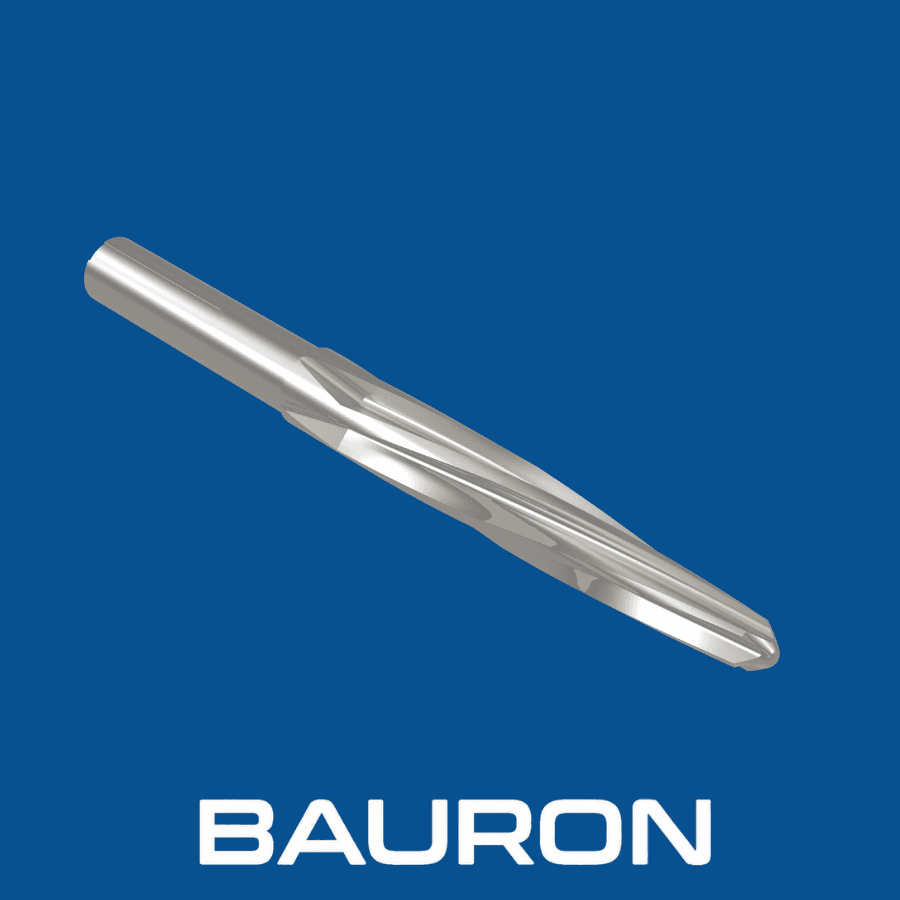
A bridge reamer is a heavy-duty tapered cutting tool used to align and enlarge mismatched holes in overlapping structural steel plates.
View Product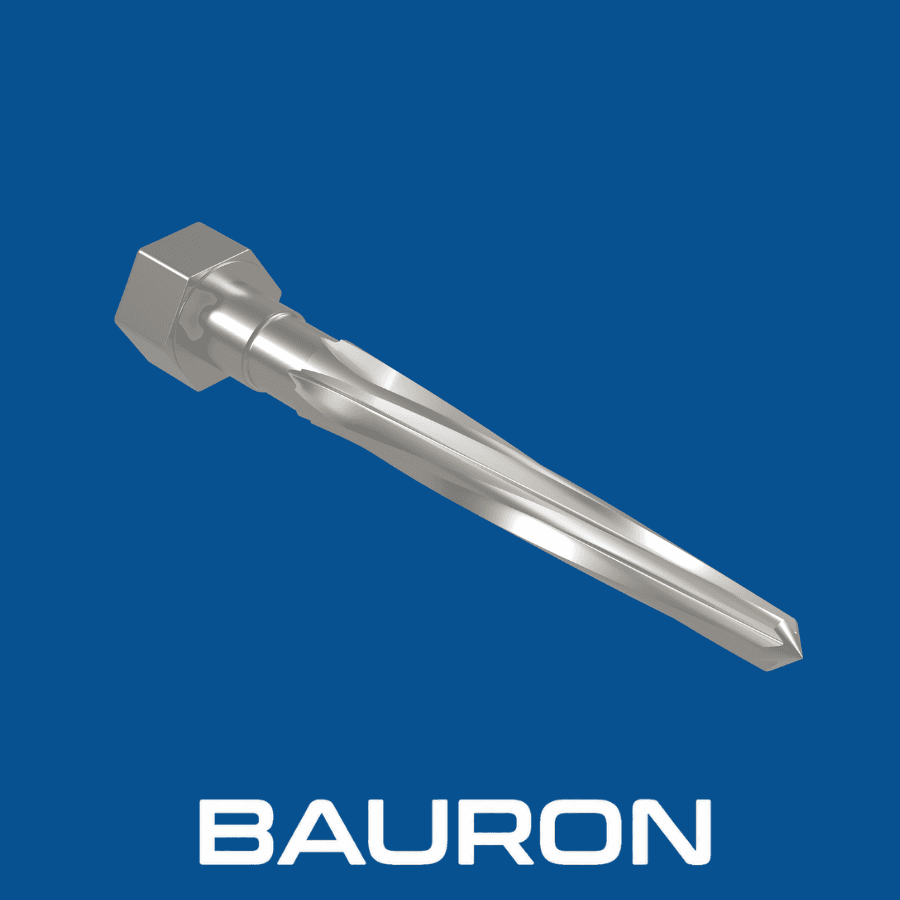
A car reamer is a heavy-duty cutting tool for enlarging and aligning undersized or mismatched holes in thick metal plates, railcars, truck frames, and structural assemblies.
View Product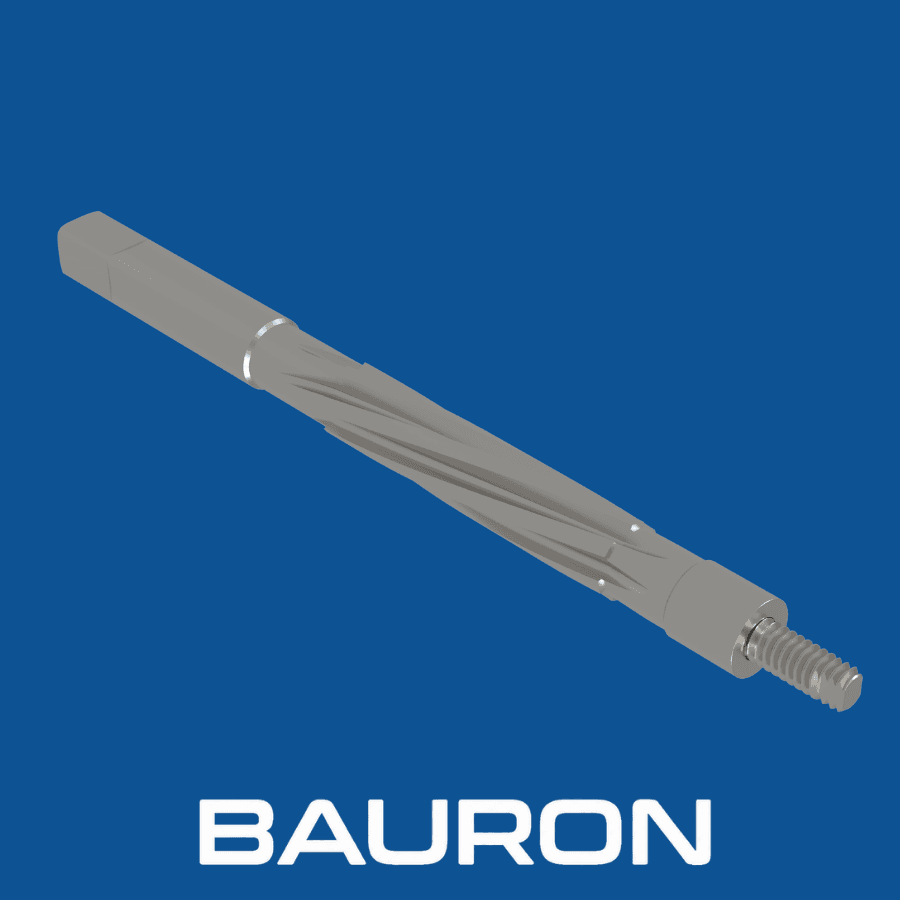
A chamber reamer is a precision cutting tool used to machine the internal cartridge profile of a firearm barrel, including the chamber body, shoulder, neck, and throat.
View Product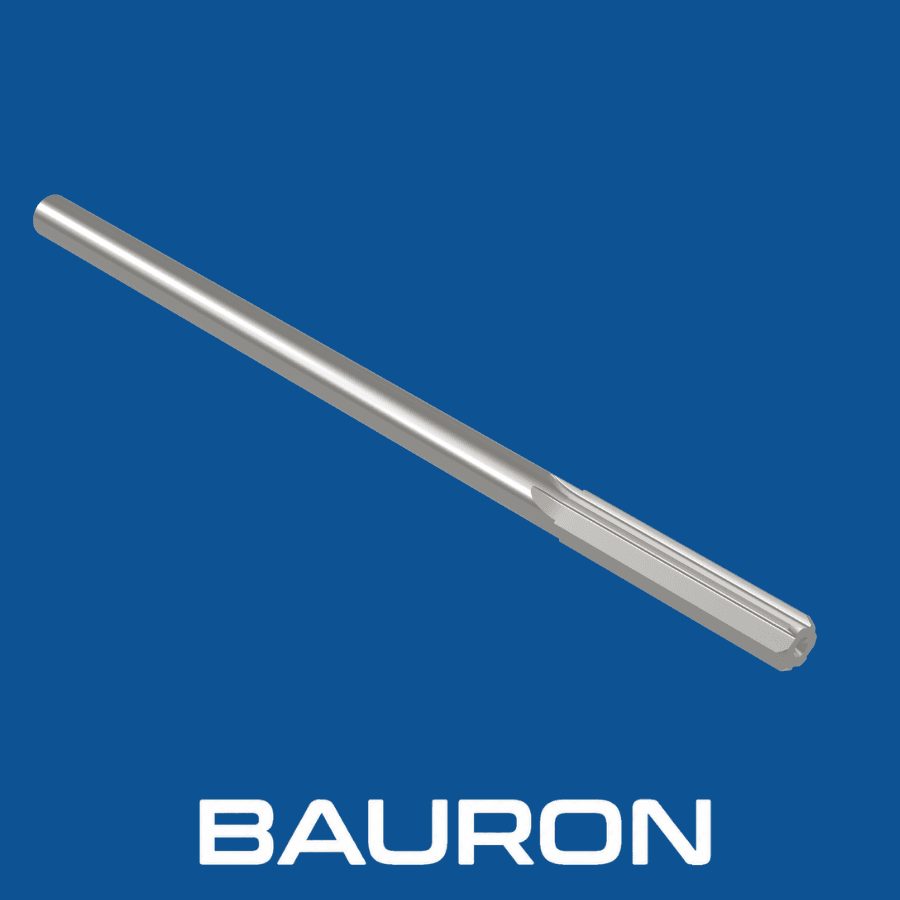
A chucking reamer is a solid-body machine tool with a straight or tapered shank for accurately sizing and finishing pre-drilled holes in production setups.
View ProductWork with Bauron's engineering team to develop a cutting tool tailored to your application, material and machining requirements.