Initial Pointing
The rigid tip contacts the workpiece and bites into the surface with zero deflection.

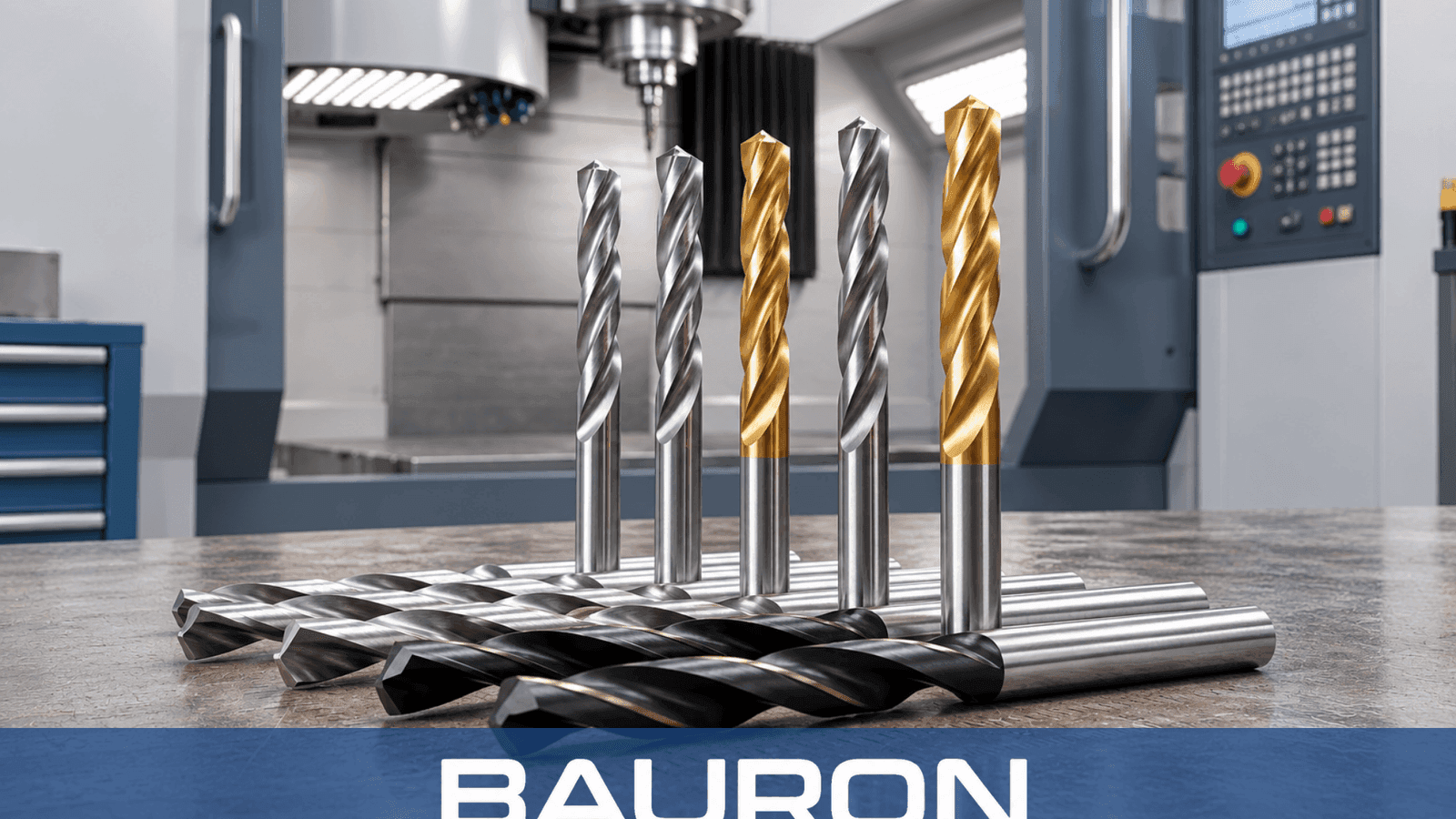
Spot drills are specialized starting tools engineered to eliminate drill wandering on CNC milling centers and manual machinery. Unlike standard twist drills, which have long, flexible flutes, spotting drill bits feature a thick web and zero spiral angle to maximize rigidity during the initial plunge.
The rigid tip contacts the workpiece and bites into the surface with zero deflection.
A quick spot-drilling pass creates a shallow conical dimple on the target coordinate.
The secondary twist drill enters the pre-spotted cone and tracks straight without "walking" across the surface.
When sized correctly, the spot drill can chamfer the hole opening during the initial plunge.
Short flute lengths and thick cores limit vibration and tool deflection.
Guides subsequent long twist drills to start at the intended location.
Spots and chamfers in one operation to reduce CNC cycle time.
Available in 90°, 120°, and 142° configurations to match the secondary drill point angle.
Solid carbide construction resists abrasive wear and maintains point accuracy over repeated cycles.
| Specification | Range / Details |
|---|---|
| Diameter Range | 1/8" to 1" (Standard and Metric sizes available) |
| Point Angle | 90°, 120°, or 142° (Must match or exceed secondary drill angle) |
| Flute Geometry | Short Flute / Zero to Low Helix |
| Shank Type | Straight Cylindrical, Weldon, or Carbide Stub |
| Tolerance | Ultra-precision ground to sub-micron accuracy |
| Operation Type | High-precision hole starting and chamfering |
| Material / Coating | Best For | Key Advantage |
|---|---|---|
| HSS (High-Speed Steel) | Aluminum, mild steel, and general job shop tasks. | Economical with impact resistance against chipping. |
| Solid Carbide | High-speed CNC production and hard alloys. | Provides rigidity that limits deflection on hard metals. |
| TiAlN Coating | High-temperature and dry machining environments. | Extends edge life and limits built-up edge when spotting stainless steel. |
HSS provides economy and impact resistance for general work, solid carbide maximizes rigidity in hard alloys and high-speed CNC use, and TiAlN helps manage heat, wear, and built-up edge.
Use spotting drill bits in automated tool changers to establish precise hole positions.
Mount the tool in a turret to spot the center face of rotating stock before deep-hole boring.
Use spot drills in manual prototyping to align holes without center punching.
Establishes positional accuracy for secondary drilling cycles on precision CNC mills.
Starts holes accurately on angled, round, or uneven surfaces while limiting tool deflection.
Plunges deeper during the spotting cycle to leave a clean, deburred 90° or 120° chamfer for tapping.
Establishes true centers on flexible sheet metal without distorting the surrounding panel.
Center drills were designed to create 60-degree conical holes for lathe centers and include a thin pilot tip. Spot drills use a continuous V-point without a pilot, giving them greater rigidity for starting standard holes on CNC mills.
The spot drill point angle should be equal to or greater than the secondary drill angle. For example, use a 142-degree spot drill with a 135-degree secondary drill so its chisel edge contacts first at the center and avoids chatter.
Yes. A 90-degree spot drill plunged slightly beyond the final hole diameter leaves a uniform 90-degree chamfer and can eliminate a separate deburring pass before tapping.
Plunge only enough to create a dimple slightly larger than the secondary drill's chisel edge or to reach the desired chamfer diameter. Spotting too deeply can make the secondary drill contact at its outer corners, causing wear or chatter.
Bauron can review requirements for spotting drill bits with non-standard point angles, extended shank lengths, or application-specific coatings. Submit the machining details for an engineering assessment.
Bauron provides design and engineering support for application-specific tooling requirements. Share the geometry, material, coating needs, and machining challenge for technical review.
Talk to Engineering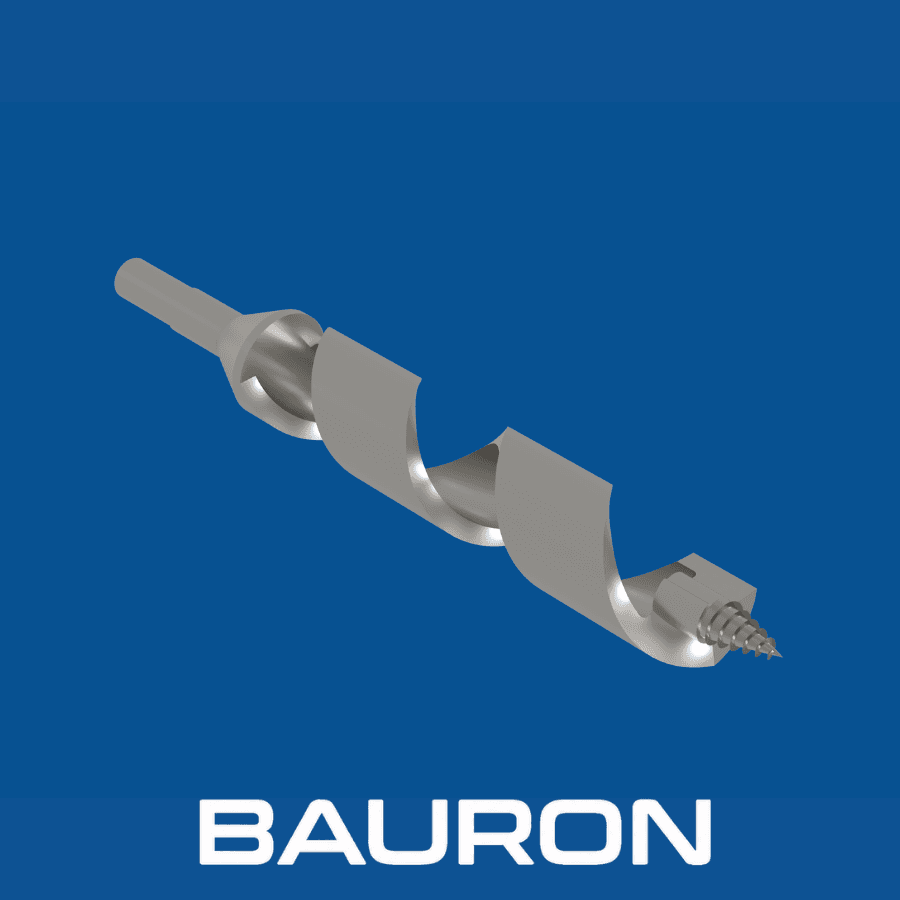
Auger drill bits are specialized, deep-hole cutting tools featuring a screw tip and wide flighting for efficient wood boring.
View Product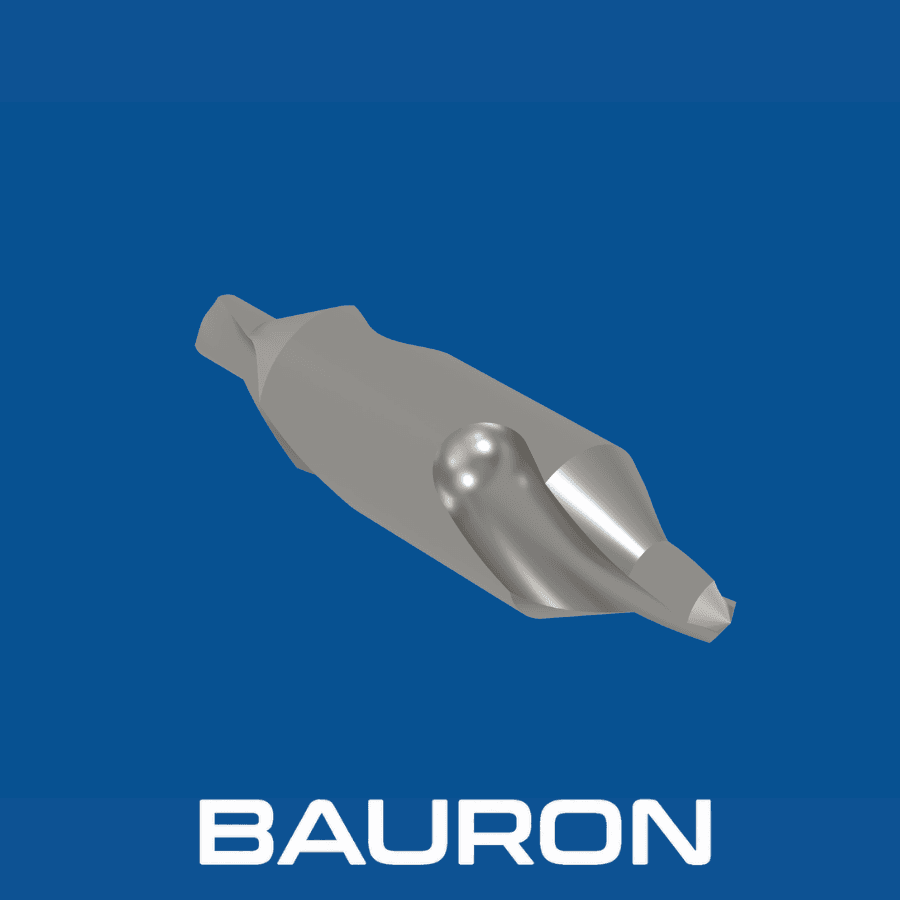
Center drill bits are short, extremely rigid cutting tools used to create precise conical pilot holes for lathe centers or secondary drilling.
View Product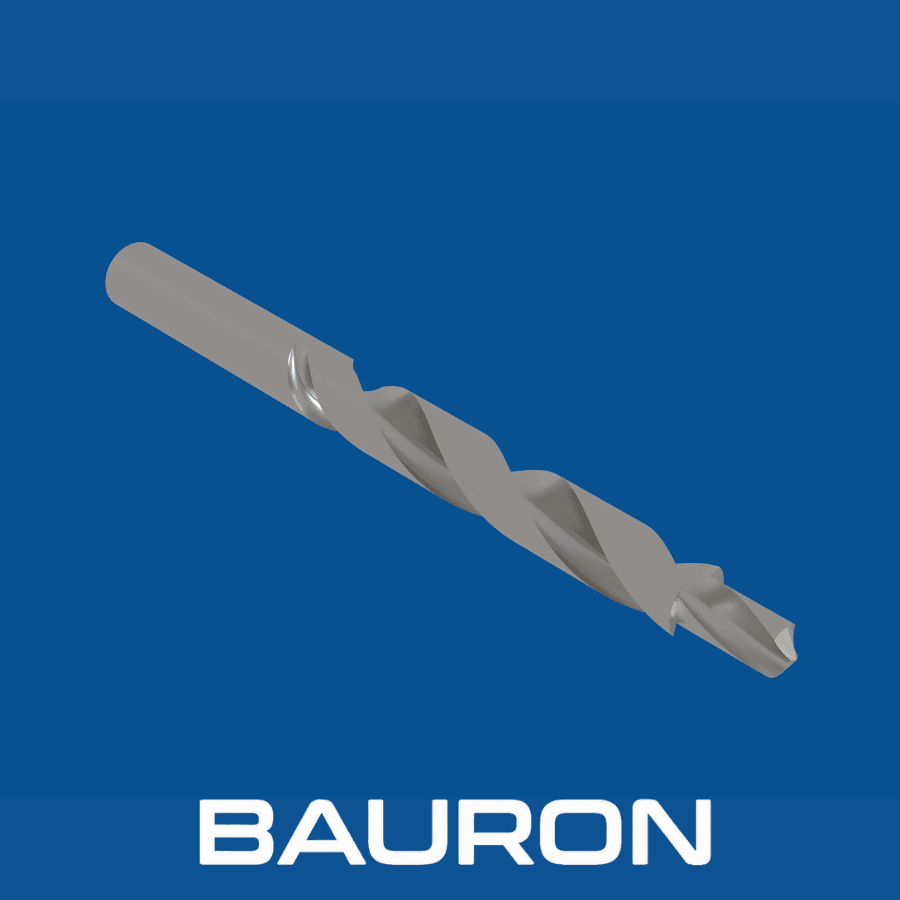
A counterbore drill is a precision cutting tool used to enlarge the top of a pre-drilled hole, creating a flat-bottomed cavity to seat fasteners flush.
View Product
A countersink drill bit is a conical cutting tool used to create an angled recess, allowing flat-head fasteners to sit flush with a surface.
View ProductWork with Bauron's engineering team to develop a cutting tool tailored to your application, material and machining requirements.