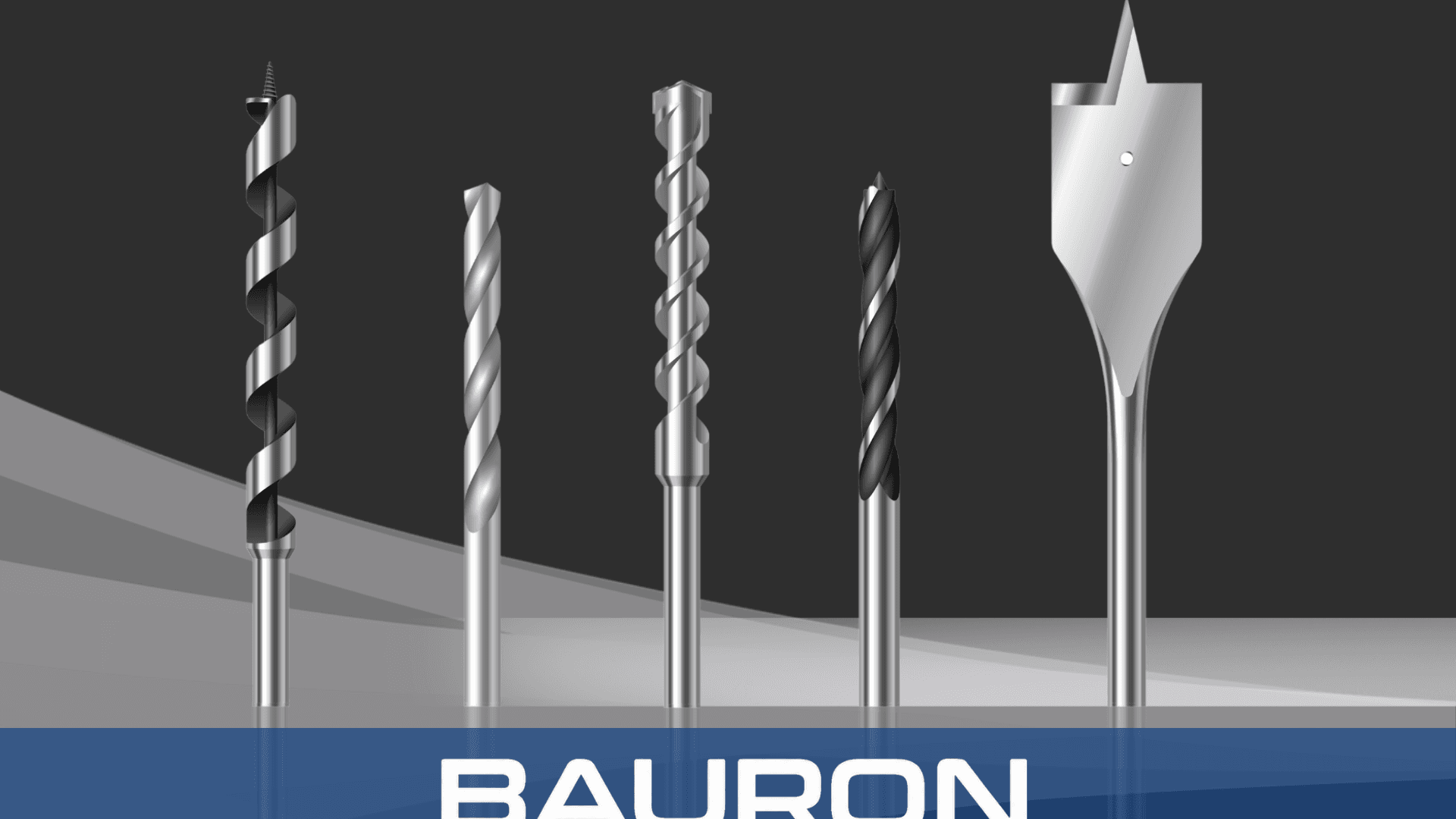
Controlled Entry
The rigid point engages without grabbing or snatching soft material.

Straight flute drills feature zero-spiral flutes that run parallel to the tool's axis. Unlike standard twist drills that tend to pull themselves aggressively into soft materials, straight flute drill bits provide a neutral cutting action that gives machinists complete feed control in short-chipping or granular metals.
The rigid point engages without grabbing or snatching soft material.
Zero-rake cutting edges shave material smoothly without pulling the bit forward.
Parallel flutes push short, granular chips straight out of the hole.
The rigid body maintains extreme wall contact, delivering exceptional hole straightness and surface finish.
Neutral rake angle prevents the tool from biting too aggressively into brass, bronze, and plastics.
Straight flutes leave a thicker steel core than spiral flutes, drastically reducing tool deflection.
Acts like its own guide, keeping holes perfectly straight through interrupted cuts.
Ideal for materials that break into small, powdery chips rather than long continuous ribbons.
Solid carbide variants excel at penetrating hardened steels up to 65 HRC.
| Specification | Range / Details |
|---|---|
| Diameter Range | 1/16" to 1" (Standard and Metric sizes available) |
| Flute Geometry | Straight Flute (Zero Helix / Parallel) |
| Point Angle | 118°, 135°, or 140° (Material specific) |
| Shank Type | Straight Cylindrical or Weldon Shank |
| Tolerance | Precision ground to exact H7 or OEM specifications |
| Operation Type | Short-chipping and non-ferrous material drilling |
| Material / Coating | Best For | Key Advantage |
|---|---|---|
| HSS (High-Speed Steel) | Soft brass, bronze, and general copper alloys. | Economical and tough, providing reliable performance as a standard brass drill bit. |
| Solid Carbide | Hardened steels, cast iron, and high-volume production. | Premium straight flute carbide drill bits offer maximum rigidity and heat resistance. |
| TiAlN / AlTiN Coating | High-hardness steels and dry machining. | Provides high surface hardness and lowers friction during high-speed CNC cuts. |
HSS provides a tough, economical option for copper alloys, solid carbide adds rigidity and heat resistance for hardened materials, and TiAlN or AlTiN coatings lower friction in high-speed machining.
Utilized for high-speed, automated hole drilling where extreme straightness is mandatory.
Mounted in turrets to bore accurate centers in brass and cast iron components.
Excellent for manual drilling in soft metals where operator safety and feed control are crucial.
Functions as the ultimate brass drill bit to prevent the tool from grabbing and binding in soft, non-ferrous alloys.
Efficiently clears granular chips in cast iron components without chip-packing.
Utilizes straight flute carbide drill bits to drill high-hardness materials where extreme tool rigidity is required.
Maintains a straight path when drilling through cross-holes or keyways without deflecting.
Standard twist drills have a positive rake angle that acts like a corkscrew in soft, ductile materials like brass. This causes the drill to violently grab, pull itself into the material, and potentially snap or throw the workpiece. A brass drill bit with straight flutes has a neutral rake that shaves the metal safely under complete operator control.
A straight flute drill is a cutting tool designed to bore a round hole into solid material. A straight flute tap is a threading tool used after drilling to cut internal screw threads into the sidewalls of the pre-drilled hole.
You should choose straight flute carbide drill bits when machining hardened steels (over 45 HRC), abrasive cast irons, or when operating high-speed CNC centers where tool rigidity and zero deflection are critical for tight tolerances.
No. Straight flutes are designed specifically for short-chipping materials (like cast iron, brass, bronze, and hard steels). Ductile materials like soft aluminum or mild steel that form long, stringy chips will quickly clog straight flutes; spiral flute drills are recommended for those applications.
Yes. Bauron specializes in custom CNC tools. We can engineer custom straight flute drills with specific point angles, step geometries, coolant-through holes, or specialized coatings tailored to your exact manufacturing requirements.
Bauron provides design and engineering support for application-specific tooling requirements. Share the geometry, material, coating needs, and machining challenge for technical review.
Talk to Engineering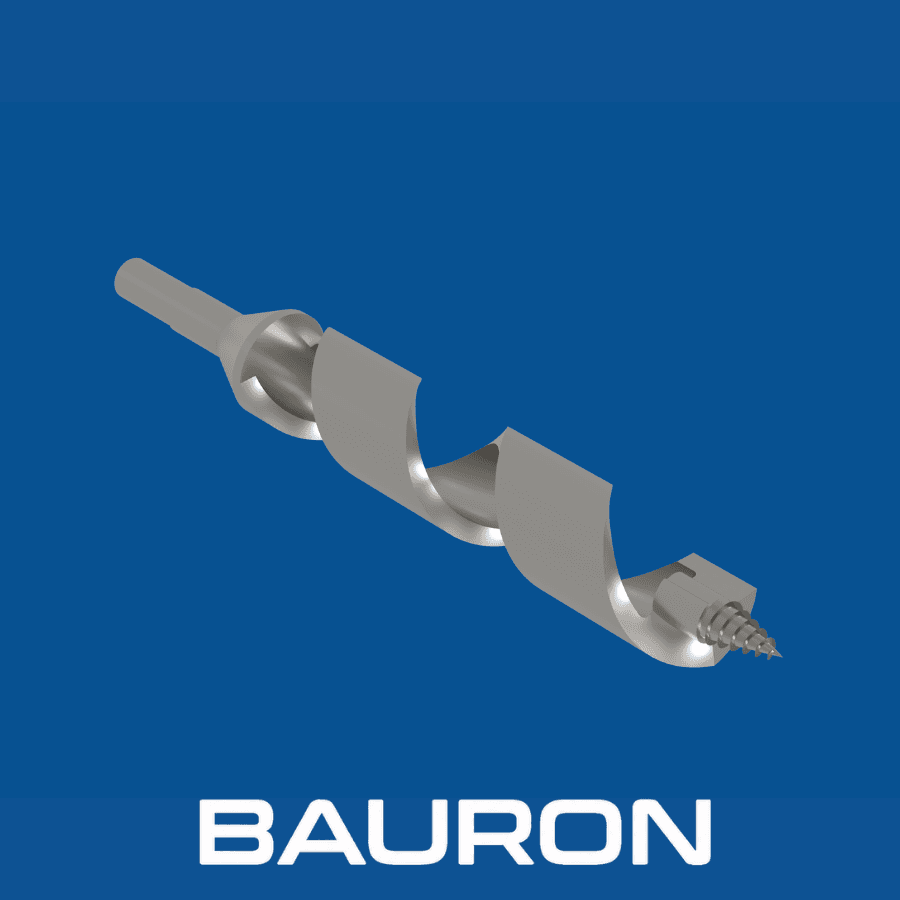
Auger drill bits are specialized, deep-hole cutting tools featuring a screw tip and wide flighting for efficient wood boring.
View Product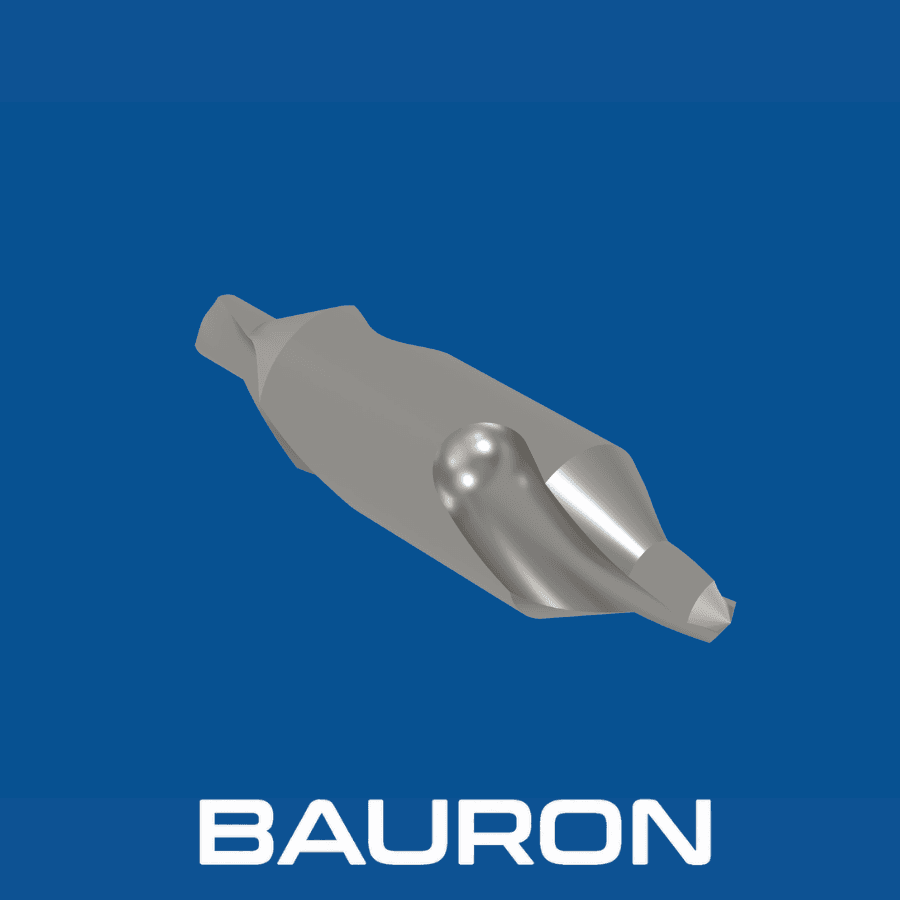
Center drill bits are short, extremely rigid cutting tools used to create precise conical pilot holes for lathe centers or secondary drilling.
View Product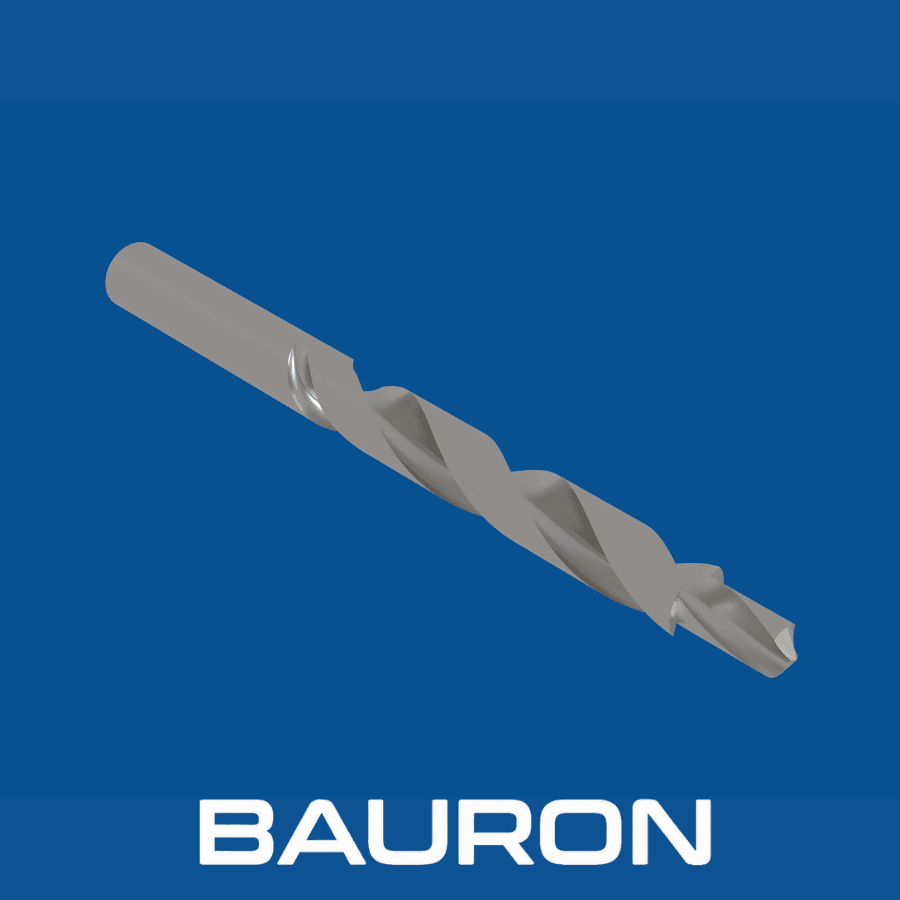
A counterbore drill is a precision cutting tool used to enlarge the top of a pre-drilled hole, creating a flat-bottomed cavity to seat fasteners flush.
View Product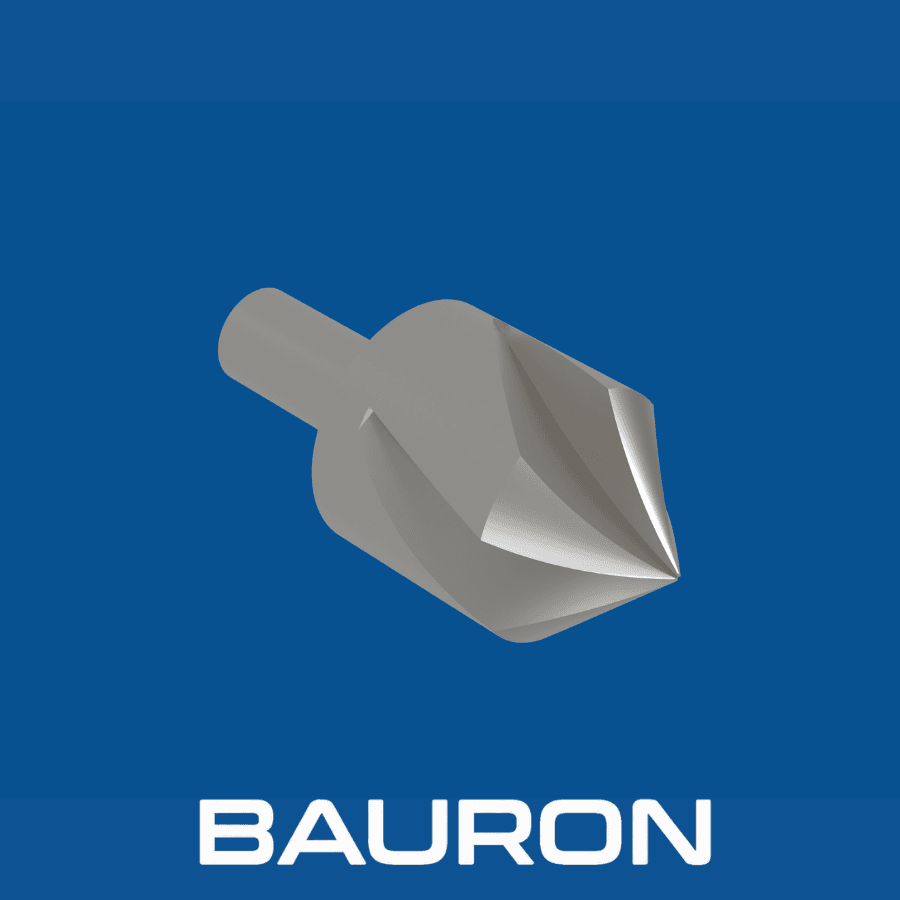
A countersink drill bit is a conical cutting tool used to create an angled recess, allowing flat-head fasteners to sit flush with a surface.
View ProductWork with Bauron's engineering team to develop a cutting tool tailored to your application, material and machining requirements.