Guided Entry
The leading chamfer engages a correctly sized pilot hole and helps establish axial alignment.

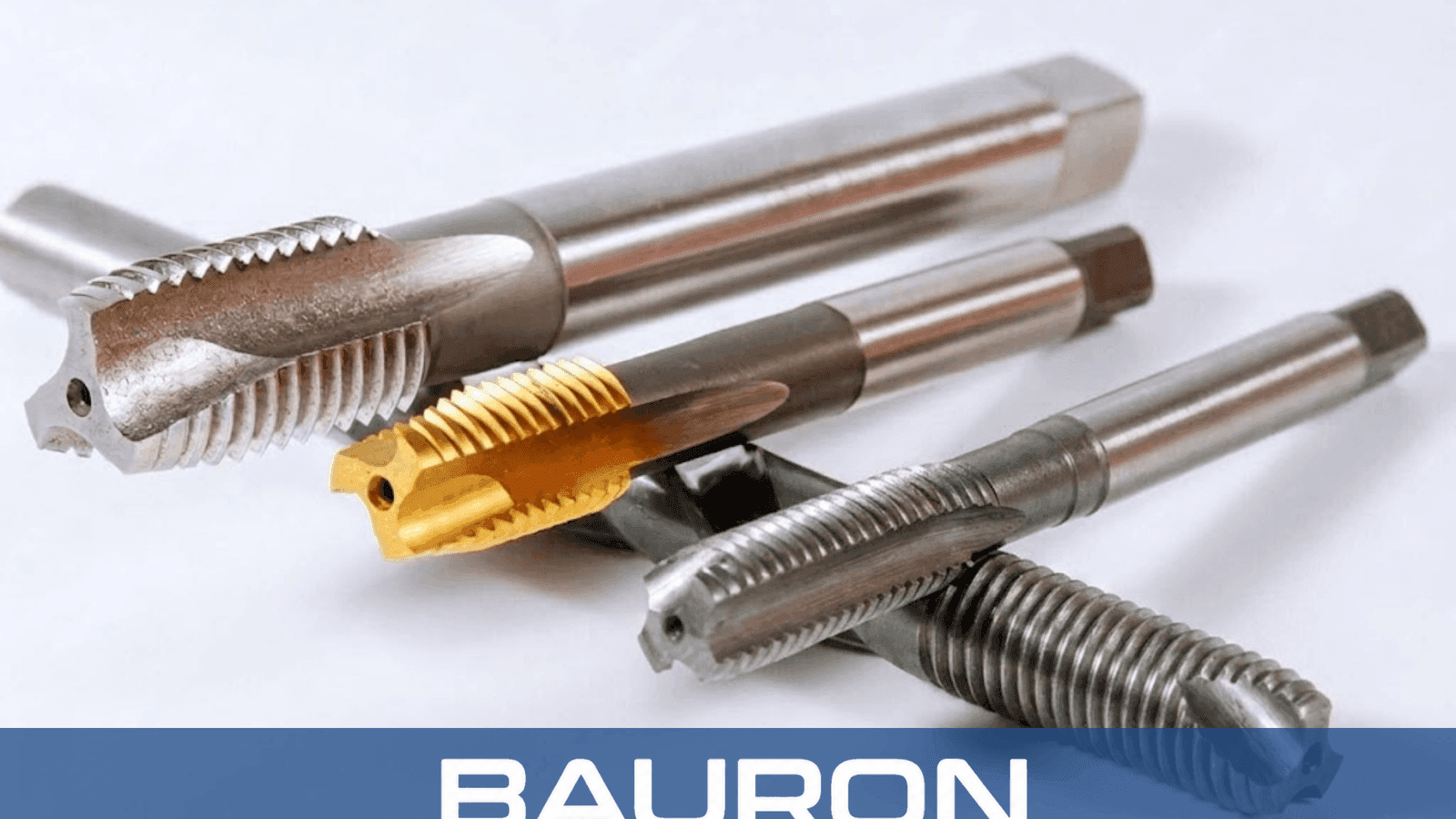
Pipe taps produce internal threads for fluid, gas, and hydraulic connections. Tapered forms such as NPT and BSPT increase in diameter along the thread, while NPS and BSPP forms remain parallel. The finished joint depends on matching thread forms, correct engagement, and the specified sealing method.
The leading chamfer engages a correctly sized pilot hole and helps establish axial alignment.
Successive teeth shear the workpiece to generate the required straight or tapered pipe-thread profile.
Tapered threads wedge during assembly, while parallel threads typically rely on a separate sealing surface or element.
Straight or interrupted flutes provide space for chips and help limit damage to newly cut thread flanks.
Accurate tapered or parallel profiles support pressure-tight joints when paired with compatible fittings and sealing practices.
A robust body helps withstand the torsional load associated with full-profile pipe threading.
NPT, NPTF, BSPT, NPS, and BSPP profiles can be specified for different fitting systems.
Alternating tooth patterns can reduce rubbing and improve chip space in demanding materials.
Configurations are available for field repair, pipe-threading equipment, and controlled CNC tapping cycles.
| Specification | Range / Details |
|---|---|
| Nominal Pipe Sizes | 1/16" to 3"+ for selected NPT and BSPT configurations |
| Thread Systems | NPT, NPTF, BSPT, NPS, BSPP, and application-specific profiles |
| Taper | 1:16 diameter taper, approximately 1° 47′ per side, for applicable tapered pipe forms |
| Flute Geometry | Straight flute or interrupted-thread style |
| Shank Type | Heavy-duty square drive or straight cylindrical shank |
| Operation Type | Straight and tapered internal pipe-thread cutting |
| Material / Coating | Best For | Key Advantage |
|---|---|---|
| HSS (High-Speed Steel) | Mild steel, brass, bronze, and cast iron fittings. | Impact toughness supports the relatively high cutting resistance of pipe-thread profiles. |
| Cobalt (HSS-Co) | Stainless steel and higher-strength alloy fittings. | Added hot hardness helps protect cutting edges in tougher workpiece materials. |
| TiAlN / Oxide Treatment | Production tapping in compatible steels and valve materials. | Surface treatment or coating can reduce friction, limit galling, and improve wear resistance. |
Select the substrate, coating, flute form, and cutting fluid for the fitting material, hole type, machine rigidity, and production volume.
Use synchronized or rigid tapping cycles to produce pipe-thread ports in valve bodies and manifolds.
Mount pipe taps in axial or live-tool stations for threaded connections on turned components.
Support repetitive threading of pipe fittings in dedicated production setups.
Allow controlled installation or thread repair where hand tapping is appropriate.
Cuts internal threads in water fittings, distribution manifolds, and service components.
Machines pipe-thread ports in valve bodies, cylinders, and fluid-power manifolds.
Prepares threaded connections in compatible pipe fittings and process-system components.
Creates internal connections in refrigeration, heating, and industrial climate-control equipment.
A standard machine tap normally cuts a parallel thread for a fastener. An NPT tap cuts a tapered pipe thread whose diameter increases along the thread to create wedging engagement with a matching fitting.
Both are tapered pipe-thread systems. NPT joints commonly use an approved sealant, while NPTF Dryseal profiles control crest and root interference to support sealing without a separate thread sealant when the joint design and application permit it.
Removing selected teeth reduces contact area and creates more chip space. This can lower tapping torque and reduce chip packing, although the result depends on material, lubrication, and cutting parameters.
Pipe sizes are nominal and do not equal the tap's major diameter. Use the drill or reamer size specified for the exact thread system, nominal size, engagement, material, and governing application requirements.
Bauron can review non-standard pitches, lead chamfers, shank lengths, flute styles, and coatings for application-specific pipe-thread tooling.
Bauron provides design and engineering support for custom pipe-thread profiles, chamfers, flute geometries, shank dimensions, substrates, and coatings. Share the fitting drawing, material, sealing method, and machine requirements for technical review.
Talk to Engineering