Initial Alignment
The smooth front pilot enters the pre-drilled bore and establishes concentric alignment.

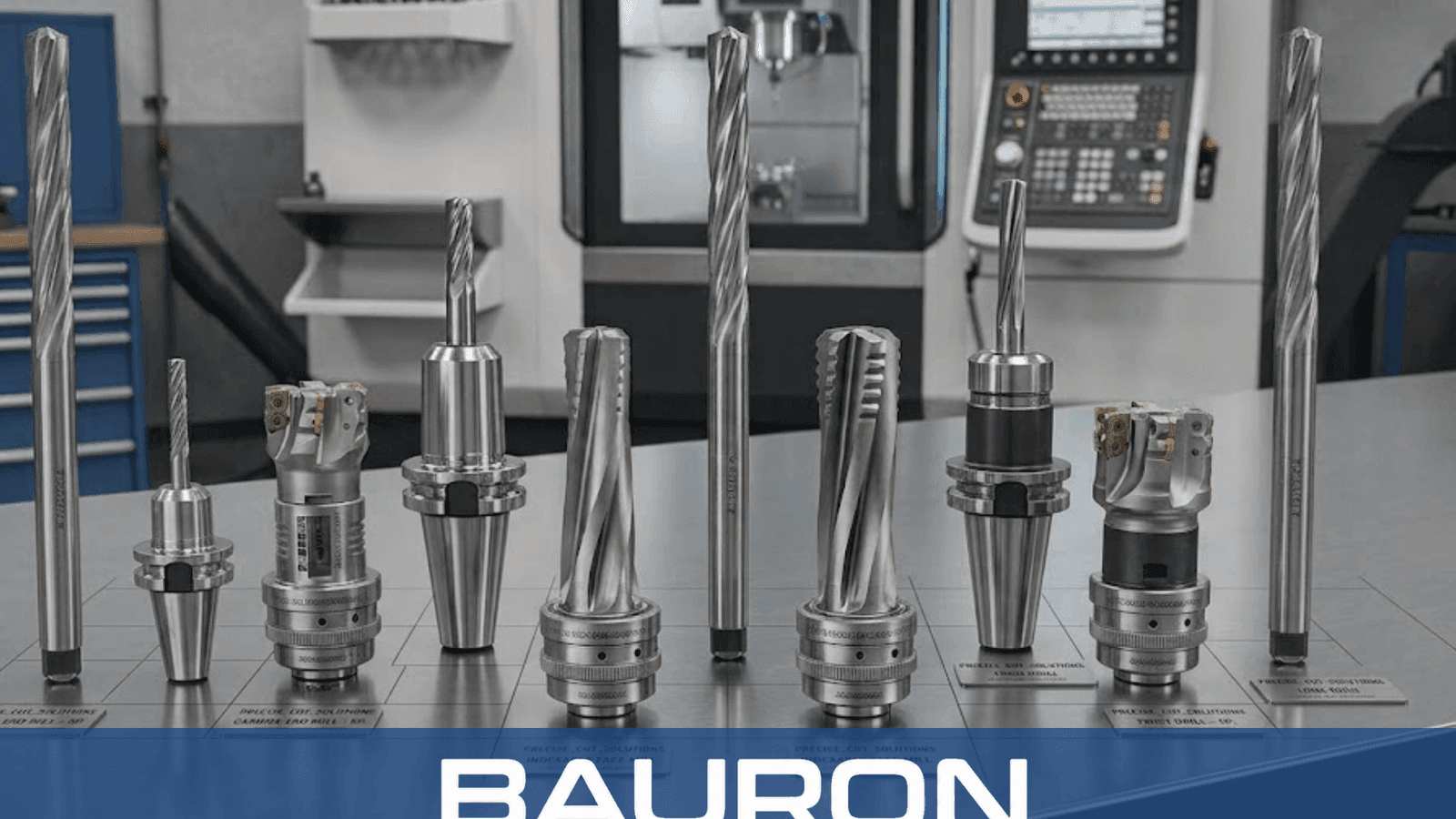
Piloted reamers enlarge existing holes while following the original bore axis. A smooth, non-cutting guide ahead of the cutting section locates in the pre-drilled bore to help control angular deviation in deep or tandem holes.
The smooth front pilot enters the pre-drilled bore and establishes concentric alignment.
The pilot follows the original centerline as the cutting section advances.
Multiple cutting edges remove material to produce the final diameter.
Flutes carry chips away while the pilot supports a straight cutting path.
Locates in the existing hole to help prevent off-center cutting.
Provides cutting edges and space for chip evacuation.
Long-pilot adjustable hand reamers support custom manual sizing of tandem bushings.
Helps limit flexing while bridging separated tandem bores.
Support close dimensional tolerances for interference fits.
Support smooth engagement from the pilot into the cutting section.
| Specification | Range / Details |
|---|---|
| Cutting Diameter | 1/8" to 2"; standard and metric sizes available |
| Pilot Diameter | Custom-ground to match the existing hole size |
| Flute Type | Straight or spiral flute |
| Shank Type | Straight, Morse taper, or square end |
| Tolerance | Precision-ground to standard H7 or specified OEM dimensions |
| Tool Format | Solid body or adjustable blade |
| Material / Coating | Best For | Key Advantage |
|---|---|---|
| HSS (High-Speed Steel) | Mild steel, aluminum, and manual bushing repair. | An economical, tough substrate for manual alignment loads. |
| Solid Carbide | High-volume CNC production and hard alloys. | Provides rigidity to help limit deflection over long pilot lengths. |
| TiCN Coating | Sticky or abrasive workpiece materials. | Reduces friction on the pilot guide and cutting edges. |
HSS provides toughness for general and manual work, solid carbide adds rigidity for long pilots and production, and TiCN can reduce friction in sticky or abrasive materials.
Drive square-shank versions for controlled hand reaming of automotive bushings.
Use rigid holders for automated concentric hole finishing.
Provide vertical driving force for large piloted operations.
Maintains a common axis across two separated holes in bearing housings.
Helps prevent tool wandering in deep bores.
Reams automotive cylinder-head valve guides for specified stem clearance.
Sizes a concentric hole before a subsequent thread-reaming or tapping operation.
Finishes steering-knuckle bushings for suspension articulation.
A chucking reamer begins with a short chamfer before its cutting flutes. A piloted reamer adds a smooth, non-cutting front cylinder matched to the existing hole so the cutting section follows the original axis.
No. The source specifies manual operation with a T-handle wrench for long-pilot adjustable hand reamers because machine power can damage the adjustable blades.
It sizes and aligns the hole before a subsequent thread reamer or tap, helping the later threading tool cut evenly around the bore.
No. The pilot is a non-cutting guide and requires an existing hole or worn bushing matched to its diameter.
Bauron can grind the pilot to match an existing hole and set the cutting diameter to the specified finishing tolerance.
Bauron provides design and engineering support for custom pilot diameters, cutting diameters, flute geometries, coatings, shanks, and tolerances. Share the hole layout and application requirements for technical review.
Talk to Engineering