Percussive Impact
A hammer drill rapidly strikes the bit forward while rotating it simultaneously.

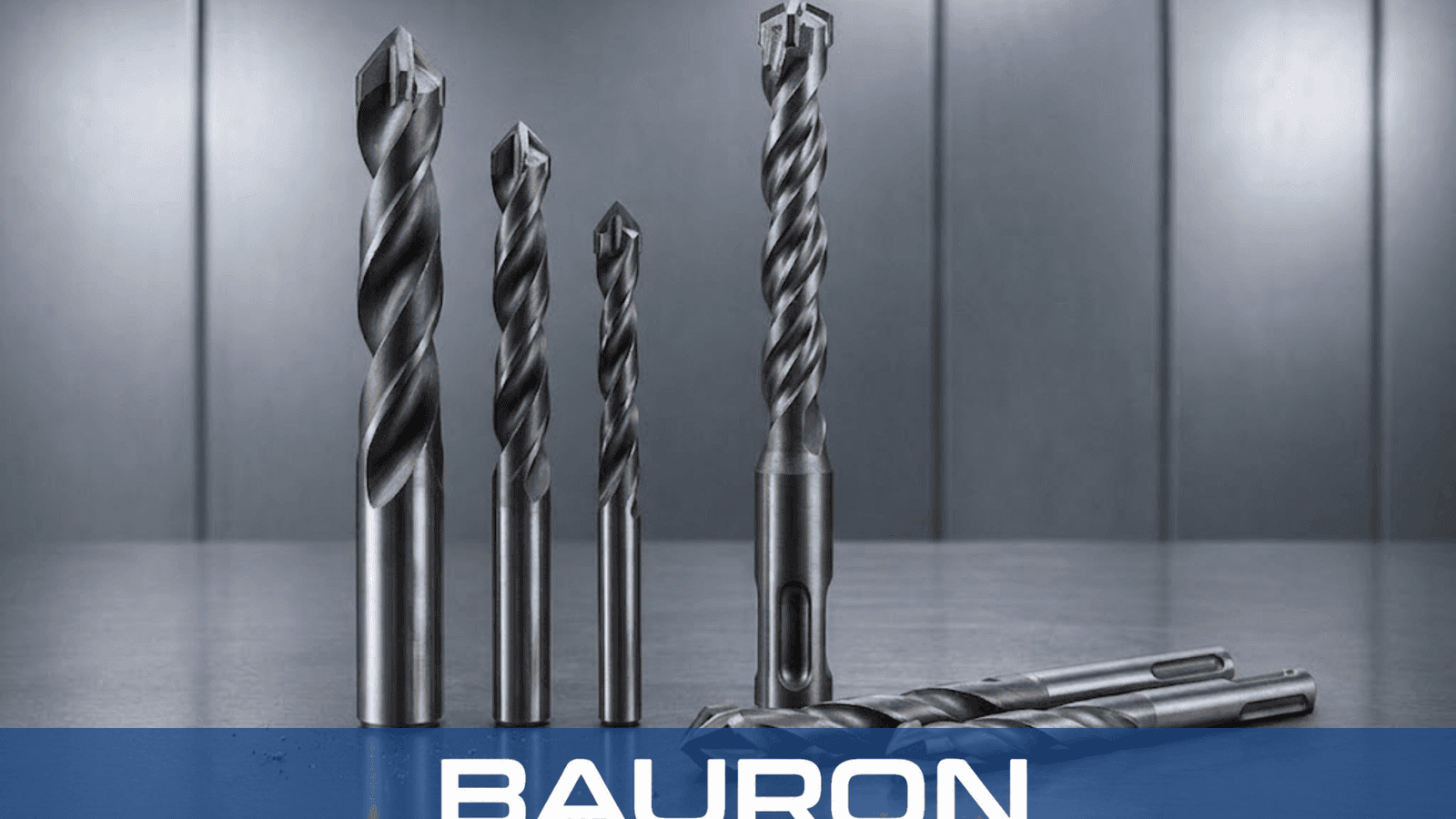
Masonry drill bits for concrete and stone operate differently from standard twist drills. Instead of purely shearing material, these tools use a percussive grinding action. Standard and long masonry bits are built to withstand impact while crushing through dense aggregate.
A hammer drill rapidly strikes the bit forward while rotating it simultaneously.
The blunt, hardened carbide tip crushes brittle masonry material into fine dust.
Deep flutes pull heavy, abrasive dust out of the hole to prevent binding.
Combined rotation and impact allow masonry bits to bore through brick and block with reduced operator thrust.
Provides hardness for crushing stone and concrete while resisting wear.
Designed to absorb the percussive shock of heavy-duty rotary hammers.
U-shaped or double-flute designs eject heavy dust to reduce overheating and binding.
Long masonry bits can pass through thick foundation blocks or retaining walls.
Heavy-duty masonry drill bits use high-carbon steel bodies to resist bending under torque and pressure.
| Specification | Range / Details |
|---|---|
| Diameter Range | 1/8" to 2" (Available in a wide range of standard masonry drill sizes) |
| Overall Length | 3" to 36"+ for deep wall penetration |
| Tip Material | Premium Tungsten Carbide (Brazed) |
| Shank Type | Straight Cylindrical, Hex, SDS-Plus, or SDS-Max |
| Flute Design | Standard Spiral or U-Flute for rapid dust removal |
| Operation Type | Rotary and Percussive (Hammer) Drilling |
| Material / Coating | Best For | Key Advantage |
|---|---|---|
| High-Carbon Steel Body | Absorbing percussive impacts. | Provides flex and toughness to help prevent the bit from snapping inside the wall. |
| Carbide Tip (Standard) | Brick, block, and plaster. | An economical, tough tip for everyday fastening tasks. |
| Carbide Tip (Cross-Head) | Hard poured concrete and reinforced stone. | Four cutting edges work through hard aggregate and resist jamming on rebar. |
High-carbon steel bodies absorb percussive loads, standard carbide tips serve brick, block, and plaster, and cross-head carbide tips add cutting edges for hard concrete and reinforced stone.
Use straight- or hex-shank bits for medium-duty rotary and percussive tasks.
Use SDS-Plus or SDS-Max shanks for aggressive drilling in poured concrete.
Use masonry bits strictly in "rotary only" mode for fragile materials such as ceramic or soft plaster.
Bores exact-sized holes for wedge anchors and concrete screws in foundations.
Uses large masonry drill bits to create passages for utility lines and electrical conduit through solid structures.
Uses brickwork drill bits to mount fixtures, awnings, or shutters while controlling damage to brick veneer.
Uses a masonry drill bit in rotary-only mode to drill brittle lath and plaster while limiting surrounding damage.
A masonry bit has a spade-like tungsten carbide tip brazed to its end to crush stone under percussive impact. Metal bits have angled cutting lips designed to shear metal and can quickly blunt or overheat in concrete or stone.
Yes. For plaster, stucco, or soft hollow cinder block, use a standard drill in rotary-only mode. Turning off hammer action helps prevent brittle plaster from blowing out.
Large masonry drill bits are suitable for holes up to roughly 1-1/2 to 2 inches. For larger plumbing pipes, HVAC ducts, or dryer vents, use a hollow carbide or diamond masonry core bit to avoid overloading the machine.
Heavy-duty masonry drill bits commonly use SDS-Plus, SDS-Max, or Spline shanks. These grooved shanks lock into rotary hammers while permitting axial movement for percussive impact transfer.
Match the drill bit diameter exactly to the anchor manufacturer's specified size. An incorrect hole size can prevent the anchor from driving correctly or reduce its holding ability.
Bauron provides design and engineering support for application-specific tooling requirements. Share the geometry, material, coating needs, and machining challenge for technical review.
Talk to Engineering